
Marine & Fishing Fleet
Marine Equipment Inspections
Landing Derricks | Power Block Cranes | Liferaft Davits | Towing Blocks | Winches | Bollard Pull Testing — examined, load tested and certified on the quayside, with a GA1 Report of Inspection for every item.
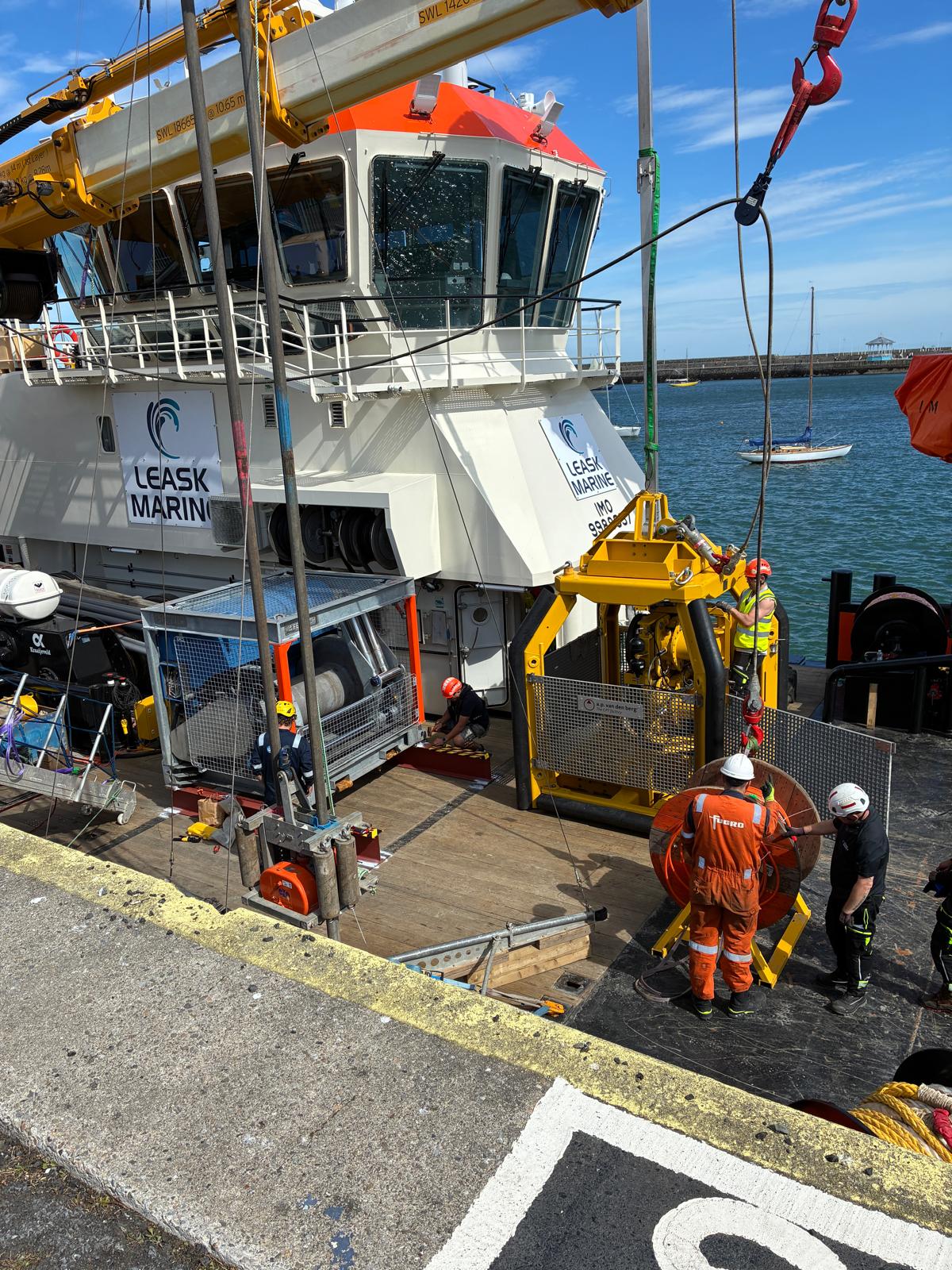
Inspections alongside, not in a workshop
Fishing boats earn nothing tied up. We work the way the fleet works — coming to the pier or boatyard, inspecting the gear in place, and issuing the certification on completion. Based in Castletownbere, Co. Cork, in the middle of one of Ireland’s busiest fishing ports, L&M has been inspecting marine lifting gear since 2016, and covers harbours nationwide.
Marine equipment we inspect
Landing Derricks
Examination of the derrick, gooseneck, heel fitting, topping and cargo runners, blocks, sheaves and wire terminations, with proof load testing where required.
Power Block Cranes
Inspection of the power block, crane structure, slew and luffing gear, hydraulics, hoses and hook fittings, and function testing under load.
Liferaft Davits
Thorough examination of launch and recovery davits, falls, winches and brakes — safety-critical, people-carrying equipment inspected at least every 6 months.
Towing Blocks
Towing and gilson blocks, sheaves, pins, bearings and towing points examined for wear, cracking and deformation, and load tested as needed.
Winches
Trawl, net drum, gilson and warping winches checked for brake performance, drive integrity, guarding, controls and wire condition.
Bollard Pull Testing
On-site bollard pull testing to verify the static pull force of tugs, workboats and trawlers, measured with a calibrated load cell and recorded on a report of inspection.
Why marine gear needs its own eye
Salt water, constant vibration and shock loading age marine equipment far faster than the same gear ashore. Wire rope corrodes from the inside, sheave pins wear oval, davit brakes seize, and a derrick heel fitting can crack long before anything looks wrong from the deck. Marine inspections look for exactly those failure modes, not a generic tick-box list.
Load testing and certification
Where a proof load test is required, it is carried out with calibrated load cells and test weights and the result recorded on the report. Each item is tagged, and a Smartcode QR tag can be fitted so the current report can be scanned up on the spot by the skipper, harbour master or an auditor — no app, no login.
Related inspections
Marine visits are often combined with lifting equipment inspections, anchor point & pad eye testing and GA1 inspections of quayside plant. Call 083 870 5355 to book a visit.
Frequently asked questions
- What marine equipment do you inspect?
- Landing derricks, power block cranes, liferaft davits, towing blocks, winches and associated lifting gear. We also carry out bollard pull testing for tugs and workboats. Each item is examined, tested where required and certified on a GA1 Report of Inspection.
- Do you come to the quayside?
- Yes. Inspections are carried out alongside, on the pier or in the boatyard, so the boat isn't tied up waiting on paperwork. L&M is based in Castletownbere, Co. Cork — the heart of the Irish fishing fleet — and travels nationwide. Call 083 870 5355 to arrange a visit.
- How often should marine lifting equipment be inspected?
- Lifting appliances such as derricks, cranes, davits and winches are normally thoroughly examined every 12 months, and lifting accessories every 6 months. Equipment used for lifting people, including liferaft davits, is examined at least every 6 months.
- Do you proof load test marine equipment?
- Yes. Derricks, cranes, davits, pad eyes and towing points can be proof load tested with calibrated load cells and test weights, with the load applied and results recorded on the report.
- What is bollard pull testing?
- Bollard pull testing measures the maximum static pulling force a vessel can generate, usually verified against a fixed bollard or quayside point with a calibrated load cell. It is recorded on a GA1 Report of Inspection and is often required for tugs, workboats and trawlers to prove towing or trawling capability.
- What paperwork do we get?
- A GA1 Report of Inspection for each item, plus a tag or marking on the equipment. Items can also be fitted with a Smartcode QR tag so a skipper, harbour master or auditor can scan the equipment and see the current report immediately.